Service · 02 / 07
Paintings Conservation
Paintings are treated as historical documents and objects of beauty in equal measure — stabilising what is fragile, removing what obscures, and reintegrating only what is genuinely lost. Every material used is fully reversible, and no treatment begins until you've reviewed and approved a written proposal.
Our approach
Treatment always follows examination, never precedes it. Full photographic documentation under normal, raking, and ultraviolet light maps the painting's condition — the soundness of support, paint, and ground, the nature of the varnish, and the extent of any earlier restoration — before a single intervention is proposed.
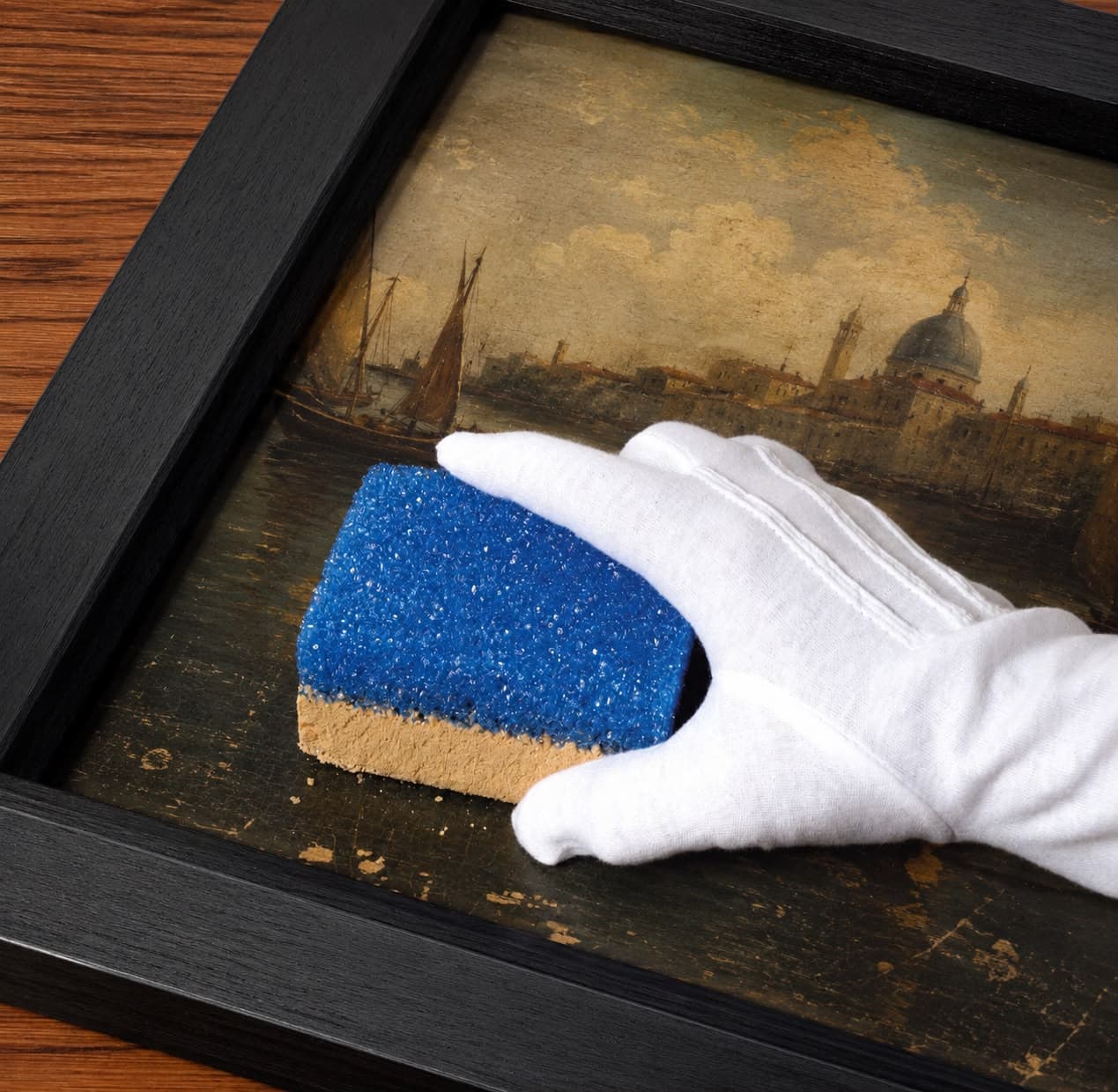
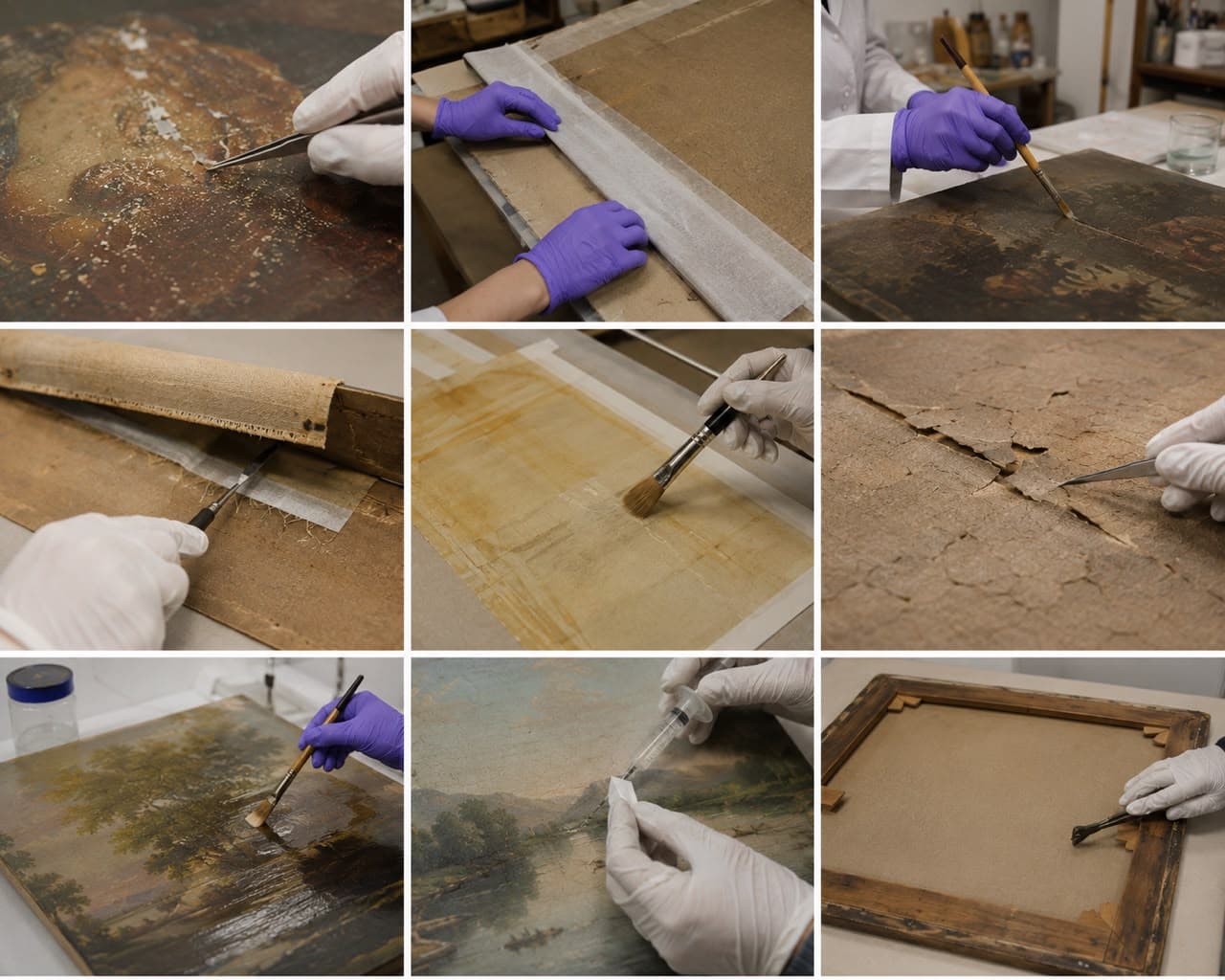
Stabilisation comes first: any actively flaking or lifting paint is consolidated immediately, since further loss can happen at any moment. Where the canvas itself has failed — slack, torn, or brittle — it's lined or locally strip-lined for support, almost always worked from the reverse so the paint surface is never touched. Surface cleaning then proceeds in careful stages under magnification, tested before it's applied and never taken further than the work allows.
Losses in the ground and paint layer are filled and inpainted using conservation-grade materials — colours that stay distinguishable from the original under ultraviolet light, so the extent of any restoration remains honestly legible. A final, reversible varnish protects the surface and settles the tone.
What's included
- Photographic documentation (normal, raking, UV)
- Consolidation of flaking paint
- Lining & structural support
- Staged surface cleaning under magnification
- Varnish reduction & re-varnishing
- Loss filling & ground preparation
- UV-distinguishable inpainting
- Written proposal & approval before work begins
Ideal for
- Oil & acrylic paintings
- Indian modern & contemporary works
- Discoloured or flaking surfaces
- Inherited family paintings
In the Studio
Other disciplines
Condition Assessment
Examination under raking light, ultraviolet, and infrared — with XRF, radiography, or microscopy where a question calls for it — to document a work's true condition before any treatment is proposed.
- UV & infrared examination
- XRF & material analysis
- Written condition reports
Paper Conservation
Specialist conservation of prints, drawings, manuscripts, watercolours, pastels, and archival material — foxing, acidity, tears, and discolouration.
- Foxing & stain reduction
- De-acidification
- Tear & loss repair
Textile Conservation
Cleaning, stabilisation, and support repair for textiles and embroidered or woven works — from fragile antique weaves to family heirlooms.
- Surface & wet cleaning
- Support stitching
- Mount & display prep
Sculpture Conservation
Structural consolidation, cleaning, and repair for stone, bronze, ceramics, wood, ivory, and mixed-media objects — treated according to how each material actually behaves.
- Structural consolidation
- Surface cleaning
- Loss repair
Preventive Conservation
Protecting collections before damage occurs — climate and light guidance, storage and handling audits, condition surveys, and emergency response.
- Condition surveys
- Climate & light guidance
- Emergency response
Documentation & Reports
Full photographic and written records of every treatment — condition reports, material analysis, and a complete conservation dossier, prepared to museum and insurance standards.
- Condition reports
- Photographic documentation
- Treatment dossiers
Begin
Let's discuss your work.
Share a few photographs and a conservator will respond personally within two business days — complimentary, confidential, and without obligation.